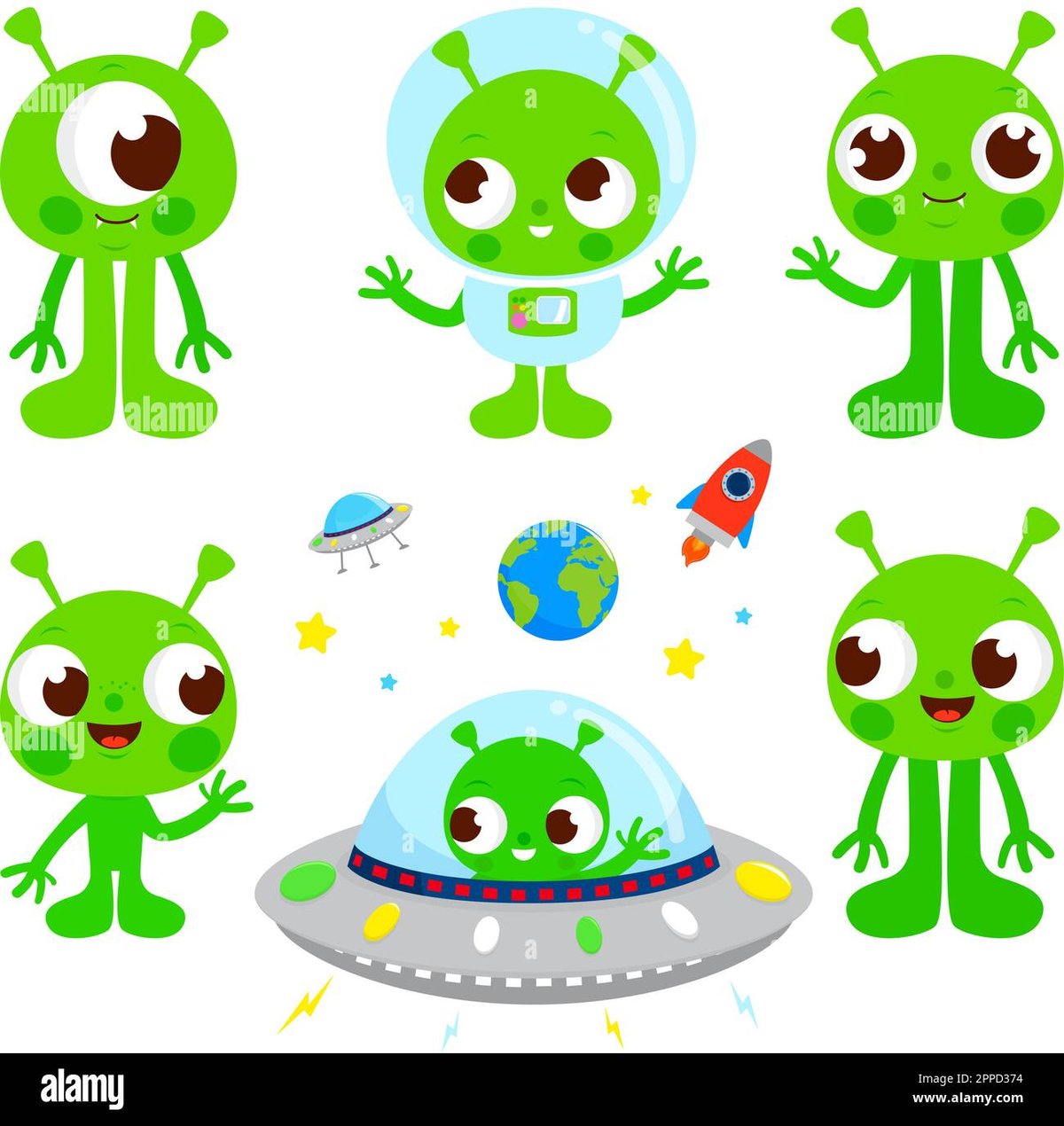
Few things spark the imagination quite like a well-designed extraterrestrial. From adorable sidekicks to fearsome conquerors, The Art & Design of Cartoon Aliens is a vibrant, limitless playground for creativity, challenging artists and storytellers to push beyond the familiar. It’s a field where biological impossibility meets narrative necessity, resulting in some of the most memorable characters in popular culture. But how do you create an alien that truly stands out, one that feels both fantastical and believable within its own context? It’s more than just slapping on some green skin and extra eyes; it’s a thoughtful process of building a unique being from the ground up.
At a Glance: Your Guide to Crafting Stellar Cartoon Aliens
- Go Beyond Humanoids: Challenge yourself to imagine radically different anatomies, sensory organs, and forms of locomotion.
- Design with Purpose: Every detail, from skin texture to limb count, should hint at your alien's environment, culture, and personality.
- Master Shape Language: Use basic shapes (circles, squares, triangles) to quickly communicate an alien's fundamental archetype or mood.
- Embrace Color Theory: Experiment with non-traditional palettes and gradients to evoke otherworldliness or specific emotions.
- Tell a Story Visually: Your alien's design should implicitly communicate its backstory, species, and role in its world.
- Avoid Common Traps: Steer clear of "human-in-a-suit" designs and ensure your creature has internal logic, however fantastical.
- Iterate and Experiment: The best designs often come from exploring many different options and pushing boundaries.
Why Our Imaginations Are So Captivated by Cartoon Aliens
Think about the sheer variety: the squishy, shapeless blobs; the multi-limbed, multi-eyed monstrosities; the sleek, advanced beings; and the hilariously inept invaders. Cartoon aliens offer a unique opportunity to break free from earthly constraints, allowing creators to explore themes of difference, belonging, and the unknown. They challenge our perception of what life can be, often serving as mirrors to our own humanity, highlighting our quirks, fears, and aspirations. Whether they’re teaching us about friendship like Stitch or confronting the absurdity of bureaucracy like Zoidberg, these characters resonate deeply because they tap into a universal curiosity about what lies beyond our world. You can easily Explore Cartoon Aliens across countless animations and comics, each offering a fresh perspective on the cosmic unknown.
The Foundational Elements: Crafting Alien Anatomy with Intention
Before you even think about personality or plot, you need a compelling physical form. The anatomy of your cartoon alien isn't just about looking cool; it's about making sense within its imagined world.
Beyond the Biped: Rethinking Form and Physiology
Our default often leans towards bipedal, two-armed creatures because it’s familiar. But the cosmos is vast! What if your alien is tripedal, like a living tripod? Or perhaps a serpentine creature with hundreds of small manipulating tendrils? Consider:
- Symmetry (or Lack Thereof): While bilateral symmetry is common on Earth, an alien might have radial symmetry (like a starfish) or even be deliberately asymmetrical to convey a sense of unsettling strangeness or unique adaptation.
- Skeletal Structure: Does it have bones? Cartilage? An exoskeleton? A hydrostatic skeleton like an octopus? This dictates how it moves and what it can withstand.
- Body Plan: Is it a collection of distinct segments, a singular mass, or something that can shift and morph? Imagine the practical implications for its daily life and interactions.
Sensory Organs: More Than Just Eyes and Ears
How does your alien perceive its world? Earth creatures rely heavily on sight and hearing, but alien senses could be far more exotic:
- Vision: Instead of two forward-facing eyes, maybe they have compound eyes (like insects), eyes on stalks, or even thermal vision. Or perhaps they perceive in ranges beyond our visible spectrum.
- Audition: Do they hear through conventional ears, vibrating membranes, or by sensing changes in air pressure with specialized antennae?
- Other Senses: What about chemoreception (smell/taste) that can detect specific elements in a planet's atmosphere? Electroreception? Sonar? Or even psionic abilities that allow them to "feel" emotions or thoughts? Thinking about these senses profoundly impacts the alien's design, from the shape of its head to specialized appendages.
Limbs and Locomotion: How Do They Get Around?
An alien’s movement tells a story about its environment and physical capabilities.
- Walking/Crawling: How many legs? What shape are their feet or pads? Are they suited for rough terrain, slippery surfaces, or zero-gravity?
- Flying: Wings of membrane, feathers, or pure energy? Or are they naturally buoyant in a dense atmosphere?
- Swimming: Fins, powerful tails, jet propulsion?
- Unique Methods: Perhaps they phase through solid objects, teleport, or use telekinesis to move. Each method requires specific visual cues in their design.
For more deep dives into constructing believable non-human forms, it's worth exploring guides on mastering alien anatomy to really push your understanding.
Crafting Personality Through Thoughtful Design Choices
A cartoon alien needs more than just a cool body; it needs a soul, a character that resonates. This is where artistic choices begin to layer meaning onto raw biology.
The Face of the Unknown: Expressions Beyond Human Norms
Human faces are incredibly expressive, but what if your alien doesn't have a conventional face?
- Non-Human Facial Features: Perhaps emotions are conveyed through bioluminescent patterns on their skin, shifting color, or the movement of tentacles around a central maw.
- Minimalist Faces: Sometimes, less is more. A simple design, like a single large eye or an inscrutable mask-like face, can convey mystery or a quiet strength.
- Exaggeration: In cartoons, exaggeration is key. A single brow ridge that can droop to epic sadness or rise to comedic surprise can be incredibly effective, even if anatomically improbable.
Body Language: Communicating Without Words
Even without a recognizable face, an alien's posture and movement can speak volumes.
- Stance: Does it stand tall and proud, hunched and suspicious, or nervously twitching?
- Gestures: What do its limbs do when it's happy, angry, or confused? Does it embrace with multiple arms, or coil defensively?
- Movement Style: Is it graceful, clumsy, predatory, or skittish? A confident stride vs. a hesitant shuffle tells us much about character.
Clothing, Gear, and Adornments: Cultural Cues
An alien's attire isn't just decoration; it’s a peek into their culture, technology, and status.
- Functional Attire: Do they wear suits to navigate different atmospheres, tools for their profession, or armor for combat?
- Ceremonial Garb: What do they wear for special occasions? Does it reflect their spiritual beliefs or social hierarchy?
- Adornments: Tattoos, piercings, headpieces, or even implanted cybernetics can signal allegiance, personal achievements, or species traits.
When contemplating these choices, remember that the best designs are often those that follow robust narrative character design principles, ensuring every visual element serves the story.
Color, Texture, and Patterns: Bringing Aliens to Vivid Life
Color isn't just pretty; it's a powerful tool for conveying emotion, environment, and even biology. Texture adds depth and believability, while patterns can suggest culture or natural markings.
Color Theory for Otherworldly Beings
Forget human skin tones. This is where you can truly go wild, but always with intention.
- Environmental Adaptation: Is your alien from a desert planet (sandy tones), a lush jungle (vibrant greens and blues), or a volcanic world (reds, oranges, blacks)? Their skin color might be camouflage or a warning.
- Emotional Resonance: Cool colors (blues, purples) can suggest calm, mystery, or sadness. Warm colors (reds, yellows, oranges) can convey energy, aggression, or joy.
- Bioluminescence: Glowing patterns or entire body parts can serve as communication, mating displays, or even a defense mechanism in dark environments.
- Unusual Palettes: Combining unexpected colors (e.g., neon pinks with deep sea blues) can immediately signal "alien" and draw the eye.
Surface Textures: Adding Tactile Dimension
A smooth, slimy surface feels very different from a rough, scaly one. These details enrich the visual experience and inform us about the alien's biology and environment.
- Scales/Plates: Suggest protection, reptilian lineage, or adaptation to harsh conditions.
- Fur/Feathers: Implies warmth, advanced sensory capabilities (like whiskers), or even flight.
- Slime/Goo: Hints at aquatic origins, a unique defense mechanism, or a non-solid state.
- Exoskeleton: Provides protection and rigidity, common in insect-like aliens.
- Rough/Craggy: Can suggest an older, tougher alien, or one made of rock-like materials.
Patterns and Markings: Nature's Art or Cultural Symbols?
Are the patterns on your alien's skin natural, like tiger stripes or leopard spots, or are they cultural, like tattoos or war paint?
- Natural Patterns: Can be for camouflage, mimicry, or to attract mates. They might be iridescent, glowing, or shift with emotion.
- Cultural Markings: These can signify rank, tribe, family, accomplishments, or religious beliefs. They often stand out more, using colors or shapes that contrast with the alien’s natural hues.
Understanding color theory for fantastical creatures is vital here, as the choices you make dramatically impact how an alien is perceived.
The Evolutionary Imperative: Designing for Purpose and Place
Great alien design isn't arbitrary. It's often rooted in a logical progression: how would this creature evolve on its home planet, given its environment, food sources, and societal structure?
Habitat and Environment: The Ultimate Shaping Force
An alien from a volcanic world will look very different from one thriving in a methane swamp or a frozen asteroid field.
- Gravity: Does the planet have high or low gravity? This affects skeletal density, limb thickness, and overall body mass.
- Atmosphere: Is it dense or thin? What's its composition? Does the alien need breathing apparatus or special lungs? Are its sensory organs adapted to its atmospheric conditions?
- Temperature Extremes: Does it need thick skin for heat, blubber for cold, or highly efficient cooling systems?
- Terrain: Rocky, watery, gaseous, crystalline? This directly influences locomotion and physical build.
Diet and Lifestyle: Predator, Prey, or Provider?
What an alien eats and how it lives shapes its mouth, teeth, claws, and overall physique.
- Predator: Sharp teeth, claws, powerful musculature, often excellent vision or other hunting senses. Think sleek, powerful, and intimidating silhouettes.
- Prey: Built for speed, camouflage, or defense. Large eyes for peripheral vision, tough hides, or perhaps a form that can quickly hide or change.
- Herbivore/Omnivore: Specialized mouths for grinding or stripping vegetation, less aggressive features.
- Scavenger/Filter Feeder: Designs might include wide mouths, filtering appendages, or strong digestive systems.
Technology and Society: Reflecting Intelligence and Culture
How technologically advanced or socially structured is your alien race? This can be subtly incorporated into their design.
- Simple Tools vs. Advanced Tech: Do they carry crude weapons, or are they integrated with high-tech implants and devices?
- Social Hierarchy: Can you tell who's a leader, a worker, or an outcast by their appearance or adornments?
- Shared Traits: Does their technology mimic their biology (e.g., organic ships for a bio-engineered race)?
The strongest designs often draw drawing inspiration from nature and then extrapolating wildly, asking "what if" at every step.
Common Pitfalls to Sidestep in Alien Design
Even experienced designers can fall into certain traps. Being aware of them can save you time and make your designs stronger.
The "Human with Green Skin" Trap
This is arguably the most common pitfall. While relatable humanoid forms have their place (especially for specific narrative purposes), truly unique alien design pushes beyond simple palette swaps or adding a few extra digits. Challenge yourself: if you remove the human-like face and body, is there anything left that screams "alien"? Don't just make a human look weird; make a weird creature look like it belongs.
Over-Designing vs. Under-Designing
- Over-Designing: Piling on too many tentacles, eyes, ridges, and glowy bits can make an alien look cluttered and lose its core appeal. It becomes a mess of features rather than a cohesive character. Simplicity often lends itself to iconic status.
- Under-Designing: On the flip side, an alien that's too generic or lacks distinct features will be forgettable. It might just be a vaguely blobby shape or a creature that blends into the background.
The sweet spot is often finding one or two truly unique, distinguishing features and letting them shine, rather than burying them under a mountain of complexity.
Lack of Internal Logic
Even the most bizarre alien needs an internal logic. If it has wings, why? If it has three heads, what's the evolutionary purpose? Without a sense of "why" behind the design choices, the alien can feel arbitrary and unconvincing, even in a cartoon world. You don't need to explain every detail in dialogue, but as the designer, you should have an answer for yourself. This attention to detail is often where you can truly begin breaking established design rules effectively because you understand the rules you're bending.
Storytelling Through Shape and Silhouette
When a character flashes across the screen, even for a second, their silhouette should tell you something immediately. This is particularly crucial for cartoon aliens, where initial recognition can be tricky.
Iconic Silhouettes: Instant Recognition
Think of some of the most famous cartoon aliens. Their shapes are instantly recognizable, even as mere shadows. Stitch (Lilo & Stitch), Zim (Invader Zim), or even Bender (Futurama) have distinct, memorable forms.
- Prioritize Clarity: Can you identify your alien just from its outline? If not, simplify or exaggerate key features.
- Unique Proportions: Experiment with unusual body-to-head ratios, limb lengths, or torso shapes to create a memorable profile.
- Dynamic Poses: Ensure your alien's silhouette is still clear and communicative in various action poses.
Shape Language: Circles, Squares, and Triangles
These fundamental shapes are powerful psychological tools that cartoon artists have leveraged for decades.
- Circles: Often convey softness, friendliness, approachability, and innocence. Think of Stitch’s rounded features or the gentle aliens in E.T.
- Squares/Rectangles: Suggest stability, strength, reliability, and sometimes stubbornness or rigidity. Characters like Bender or certain robust alien generals might fit this.
- Triangles: Implied dynamism, aggression, danger, or intelligence. Sharp points can indicate speed, cunning, or a predatory nature. Many alien ships and villains utilize triangular motifs.
By thoughtfully combining and contrasting these basic shapes, you can imbue your alien with an instant, subconscious personality.
Dynamic Poses: Expressing Action and Emotion
A static alien is a boring alien. Even during the design phase, think about how your creature will move and express itself.
- Lines of Action: Use fluid, curving lines to guide the eye and suggest motion, even in still images.
- Exaggeration for Impact: Cartoons thrive on exaggeration. A pose of surprise might involve a massive recoil, or anger might manifest as a body tightly coiled and bristling.
- Weight and Balance: Ensure your alien's poses feel grounded (or appropriately floaty for zero-G), conveying its physical mass and the forces acting upon it.
Q&A: Your Burning Questions About Alien Design
"How do I make my alien truly unique and not just another cliché?"
The key is to combine familiar elements in unfamiliar ways, and to ground your design in a unique "why." Don't just pick features randomly. Start with a core concept: What is its purpose? What is its planet like? What unique challenge does it face? Then, let those questions guide your design decisions. For example, instead of "a green alien," try "an alien from a gaseous planet that navigates by echolocation and communicates through bioluminescent pulses." That specificity will naturally lead to unique design choices. Also, draw inspiration from obscure sources – deep-sea creatures, microscopic organisms, or forgotten folklore.
"Should all my aliens look different within a single species?"
For the most part, no, not dramatically. Within a single species, you'd expect general similarities, much like humans. However, you can introduce individual differentiation through:
- Age: Younger vs. older aliens.
- Gender: Subtle or pronounced physical differences.
- Status/Role: Body modifications, specialized attire, or markings.
- Subtle Variations: Different eye colors, minor scars, unique accessories.
- Mutations/Abnormalities: A rare individual might look notably different.
The goal is consistency within the species, with room for character expression.
"What role does humor play in cartoon alien design?"
Humor is a massive part of cartoon alien design! Exaggeration, absurdity, and breaking expectations are tools cartoonists use brilliantly. A goofy expression, disproportionate features (a tiny head on a huge body, or vice-versa), or an alien struggling with basic human concepts can instantly evoke laughter. Think about characters like Roger from American Dad or the various aliens in Rick and Morty. Their designs often underscore their comedic traits, from their bizarre forms to their expressive (or inexpressive) faces. Humor often stems from unexpected contrasts – a terrifying alien with a squeaky voice, or a majestic creature with an embarrassing habit.
Your Journey into the Cosmos of Creativity
The universe of cartoon alien design is boundless, limited only by your imagination. It’s a dynamic field that rewards curiosity, experimentation, and a willingness to question everything you think you know about life. Don't be afraid to sketch wildly, to combine disparate elements, and to tell a story with every line, curve, and color choice.
Start by observing the world around you—the intricate patterns of insects, the elegant forms of deep-sea creatures, the alien landscapes of distant planets captured by probes. Then, ask "what if?" What if that beetle had three eyes? What if that fish lived on a desert planet? What if that flower could fly? The answers to these questions are the seeds of your next great cartoon alien. So grab your pencil, tablet, or clay, and begin shaping the next inhabitant of our collective cosmic dreams. The stars are waiting for your creations.