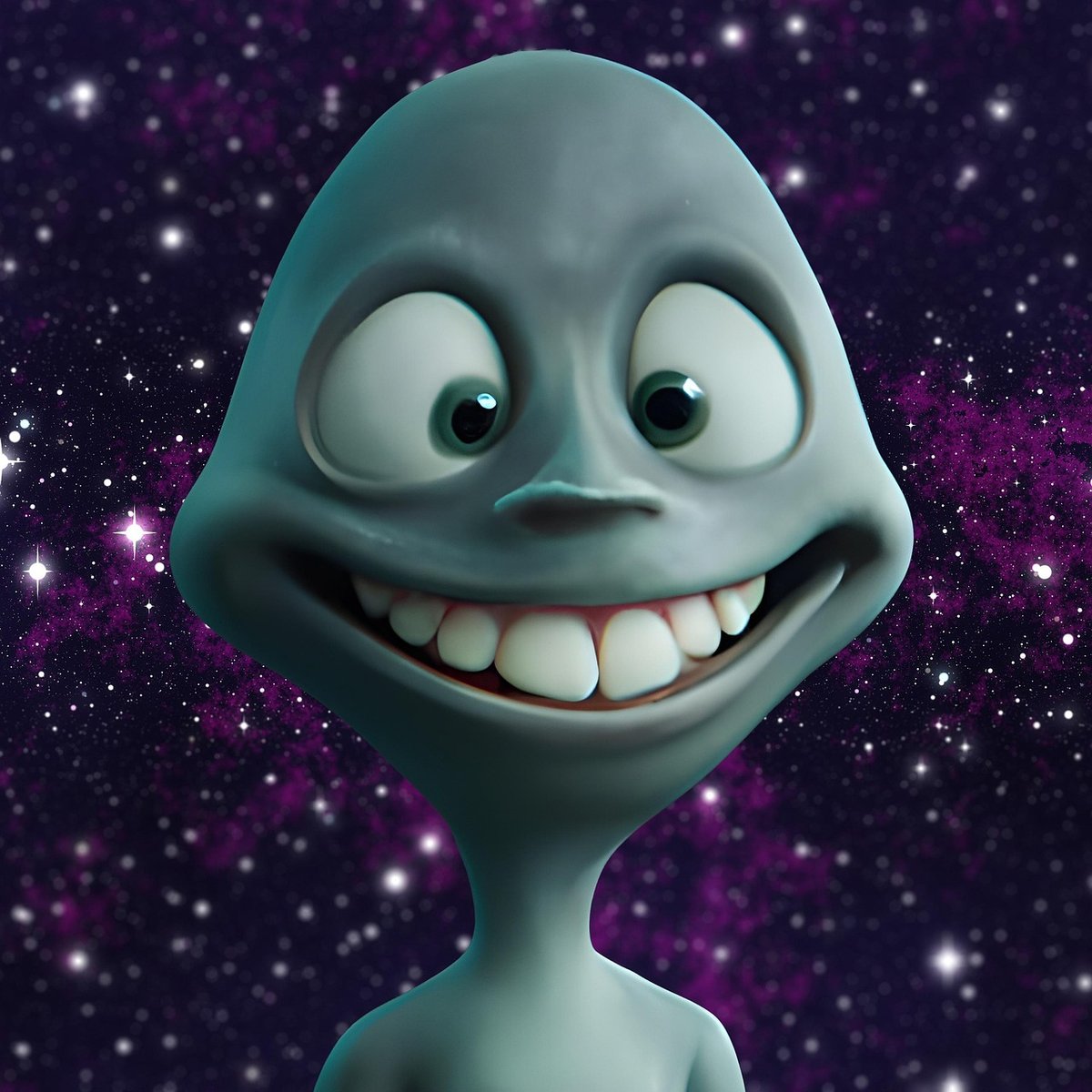
In a universe teeming with fantastical creatures, few have captured our collective imagination quite like iconic cartoon aliens. From the mischievous invaders plotting global domination to the lovable outcasts seeking a place to belong, these animated extraterrestrials have not only entertained us for decades but have also left an indelible cultural impact on pop culture, subtly shaping our perceptions of the "other," our technological anxieties, and even our capacity for empathy.
They aren't just silly characters; they're reflections of our deepest curiosities and fears about the cosmos, brought to life with ink and animation cells. As a seasoned journalist who has observed the subtle currents of pop culture for years, I can tell you that the influence of these cosmic critters runs far deeper than you might imagine.
At a Glance: Key Takeaways on Cartoon Aliens
- Early Cosmic Explorers: Cartoonists depicted aliens decades before the first moon landing, using them for whimsy and imagination.
- The "Little Green Men" Phenomenon: This pervasive trope has specific origins, but wasn't the only early alien design.
- Allegories for Humanity: Aliens often serve as potent metaphors for societal anxieties, political commentary, and our shared human experience.
- Design & Personality Pioneers: Unique visual styles and memorable quirks have elevated many cartoon aliens to legendary status.
- Beyond Entertainment: These characters influence language, merchandise, and broader discussions about diversity and acceptance.
- Enduring Legacy: Iconic cartoon aliens continue to inspire new stories, art, and even scientific curiosity.
The Cosmic Canvas: A Brief History of Alien Depictions in Animation
Long before Neil Armstrong took his giant leap, cartoonists were already charting courses to distant planets. The allure of space offered an unparalleled playground for creative expression, allowing animators to conjure beings far stranger and more visually compelling than anything found on Earth.
In the silent era, characters like Felix the Cat and Ko-Ko the Clown embarked on lunar escapades, meeting rudimentary, often flat and simple, alien designs. Think "The Moon Special" (1928), where aliens were depicted as little more than flat coasters with limbs—a testament to early animators’ boundless imagination within technical constraints.
As animation gained sound, the floodgates opened. Max Fleischer Studio's "Up to Mars" (1930) presented a diverse menagerie of Martian designs, while Walter Lantz's "Mars" (1930) had Oswald the Lucky Rabbit encountering a host of "Martian weirdos." Ub Iwerks, a co-creator of Mickey Mouse, took a darker turn with "Stratos-Fear" (1933), depicting a truly nightmarish distant planet through the eyes of Willie Whopper. Even Tex Avery's "The Cat That Hated People" (1948) sent its feline protagonist to the moon, where he encountered beings of increasing zaniness. These early forays established a precedent: aliens were a blank slate for visual comedy, fear, and abstract design.
Before the "Little Green Men" Became Standard
You might assume the "little green men" trope was always there, but that’s not quite right. While green aliens did appear early—Popeye battling green space beings in "Rocket to Mars" (1946) is a prime example—the specific, bug-eyed "little green men" stereotype wasn't fully cemented until after the Kelly-Hopkinsville Encounter in 1955. Prior to that, as seen in Bob Clampett's "Kitty Kornered" (1946), "Men from Mars" were often multicolored oddballs, not conforming to a singular type. Post-1955, however, the compact, green alien look became common, evident in characters like Mot from Chuck Jones’ "Rocket-Bye-Baby" (1956). This evolution shows how real-world events can directly impact our fictional universes.
Architects of the Absurd: Creating Iconic Intergalactic Personalities
What makes a cartoon alien iconic? It's often a potent mix of unforgettable design, a distinct personality, and a knack for showing up in just the right place at the right time.
Marvin the Martian: The Mild-Mannered Menace
Perhaps no alien embodies understated villainy quite like Marvin the Martian. Created by the legendary Chuck Jones, Marvin's design is a stroke of minimalist genius: a bowling ball head, oversized basketball sneakers, and Roman Hoplite armor. This unique aesthetic, coupled with his soft-spoken demeanor contrasting with his world-destroying ambitions, made him an instant classic.
First appearing unnamed in Looney Tunes shorts, then briefly as "Antwerp" in some promos, he finally received his iconic moniker "Marvin" in "The Bugs Bunny/Road Runner Movie" (1979). His most memorable early role was in "Duck Dodgers in the 24½th Century" (1953), cementing his status as one of animation's most beloved antagonists. Marvin taught us that even the most polite individuals can harbor truly destructive goals, and that fashion is timeless, even in space.
The Space Age TV Invasion: From Gazoo to Colonel Bleep
The Sputnik launch in 1957 kickstarted the Space Age, and television animation wasted no time cashing in on the public's fascination with all things extraterrestrial.
- The Great Gazoo (The Flintstones): This diminutive, green alien with reality-bending powers was a literal deus ex machina for Fred and Barney, capable of solving any problem (and creating many more). Gazoo, though often annoying to the Flintstones, was a hilarious manifestation of alien advancement versus prehistoric simplicity.
- Gidney and Cloyd (Rocky & Bullwinkle): These two Moon Men, with their distinct voices and bumbling schemes, were quintessential examples of comedic alien foils in the Cold War era, where the "other" could be both threatening and utterly ridiculous.
- Beepin’ Tom (Beany and Cecil): A truly screwball alien, Tom communicated through beeps and visual puns appearing in a word balloon – a visual gag that still holds up.
- Colonel Bleep (1957): A true pioneer, Colonel Bleep was not only the first cartoon alien to star in his own series but also the first animated TV series ever produced in color. His show featured a gorgeous mid-century futurist art style, proving that aliens could lead the charge in animation innovation.
- Moko the Mischievous Martian (1964): In a backdoor pilot on the live-action "Mr. Ed," aliens were depicted as ethereal beams of light, pushing the boundaries of what an alien "looked" like.
- Professor Balthazar (1967): This psychedelic Yugoslavian series offered even stranger visions, like a gloppy alien egg enthusiast named Viktor in "Viktorov jajomat." These characters illustrate the vast spectrum of creative freedom animators found in depicting alien life.
These space age characters weren't just funny; they reflected societal excitement and anxieties about space exploration and the unknown. They also showed that aliens could be heroes, villains, or simply cosmic neighbors.
Advertising's Alien Ambassadors
The cultural impact of cartoon aliens wasn't confined to Saturday mornings. They even invaded our breakfast tables. Around 1961, Jay Ward produced commercials for Quaker Oats' Quisp cereal, featuring a propeller-headed alien voiced by the iconic Daws Butler. This little guy wasn't just selling cereal; he was embedding the whimsical, friendly alien archetype into the very fabric of daily life, connecting space-age wonder with breakfast routines.
Beyond the Green Skin: The Multifaceted Impact of Alien Characters
Iconic cartoon aliens do more than make us laugh; they serve as powerful allegories, cultural touchstones, and even drivers of economic activity. Their influence extends far beyond the screen. You can always learn more about cartoon aliens and their fascinating history.
Reflecting Human Fears, Hopes, and Anxieties
Think about it: who better than an alien to hold a mirror up to humanity?
- Cold War Paranoia: Many early alien invasion stories, like those featuring Marvin the Martian, subtly tapped into Cold War anxieties, portraying an external threat with superior technology. These narratives allowed audiences to process fears about unknown enemies and the potential for world-altering conflict.
- Technological Progress & Peril: Aliens often represent scientific advancement, sometimes utopian, sometimes apocalyptic. Characters like Gazoo, with his advanced tech, offered a humorous take on how future technology might overwhelm or confuse us.
- The "Other" in Society: At a deeper level, aliens frequently symbolize the "other"—anyone perceived as different or outside the norm. Their struggles for acceptance, or their attempts to understand human customs, can gently encourage empathy and understanding towards diverse groups here on Earth.
Shaping Pop Culture Language and Lore
The impact of iconic characters extends to our everyday language and references. Just as Bugs Bunny's "What's up, Doc?" became a catchphrase, many cartoon aliens contribute to the lexicon of pop culture. Think of the enduring imagery of UFOs and "little green men" itself—a concept popularized by cartoons.
Later examples, like SpongeBob SquarePants (though not an alien, he shows the power of a distinctive character) generated countless memes and viral content, demonstrating how impactful animation characters become part of global online discourse. Similarly, specific alien characters inspire quotes, fan art, and become shorthand for certain personality traits or situations. The sheer visual diversity of cartoon aliens has also fostered a rich tapestry of fan culture, with enthusiasts celebrating everything from classic designs to modern interpretations like Stitch, Invader Zim, and The Simpsons' Kang & Kodos.
Merchandise and Marketing Might
The most popular cartoon aliens don't just stay on screen; they jump onto lunchboxes, action figures, video games, and apparel. This merchandising power is a testament to their deep cultural resonance. Consider the Pokémon franchise, which has generated over $100 billion in revenue, with Pikachu as its ubiquitous mascot. While Pikachu isn't an alien, its global phenomenon status and influence on marketing strategies provide a clear parallel to how immensely successful an alien character can become once it captures the public's heart.
Similarly, Disney's revenue, in the tens of billions, is significantly boosted by merchandise and licensing for characters like Mickey Mouse. An iconic alien character, given the right platform, can achieve similar levels of brand recognition and economic impact, proving that these characters are not just entertainment but powerful global brands. When you see a popular alien character on a t-shirt, you're witnessing the tangible outcome of decades of cultural impact.
Pushing Animation's Boundaries and Artistic Freedom
The very nature of aliens—being unbound by earthly biology or physics—has given animators immense freedom. This is where "fantastically impossible visual whimsy," as seen in early works like "Mars and Beyond" (1957), truly flourished. Cartoon aliens have consistently been at the forefront of innovative design, unique character animation, and daring storytelling. They allowed for:
- Exaggerated Features: Unconstrained by human anatomy, aliens can be any shape, size, or color, leading to wildly creative and memorable designs.
- Surreal Environments: Their home planets offer opportunities for breathtaking, imaginative backdrops that push the limits of animation aesthetics.
- New Forms of Movement: Animators experiment with how these beings move, defying gravity or conventional locomotion, adding to their distinctiveness.
This creative freedom has not only enriched the alien characters themselves but has also propelled the entire animation industry forward, inspiring new techniques and artistic approaches.
Champions of Diversity and Otherness
In recent years, the concept of "otherness" has gained new dimensions in animated storytelling. While not always literal aliens, characters in shows like "Steven Universe" and "The Legend of Korra" (as highlighted in our research on iconic characters) have promoted diversity and representation by featuring characters from various backgrounds, genders, and orientations.
This principle extends to alien characters as well. When a narrative embraces an alien protagonist, it often explores themes of acceptance, belonging, and understanding differences. From the lovable Stitch, a destructive experiment who finds a family, to the outcast Invader Zim, these characters can subtly educate audiences about acceptance and inclusivity. They normalize diverse identities by presenting beings who are fundamentally different yet still worthy of love, friendship, or at least, a good laugh. They implicitly ask us to consider: if we can root for a blob from outer space, why can't we accept people who are different here on Earth?
The Modern Alien Landscape: What's Next?
The legacy of classic cartoon aliens continues to evolve. Modern animation keeps pushing the boundaries, introducing new extraterrestrial icons that resonate with contemporary audiences. We see this in the nuanced character development of creatures like Stitch from Disney's "Lilo & Stitch," who embodies themes of family and acceptance despite his destructive origins. Then there’s the delightfully cynical Invader Zim, whose absurd attempts at conquest in "Invader Zim" capture a unique blend of dark humor and social satire. And, of course, The Simpsons' Kang & Kodos remain perennial favorites, satirizing alien invasion tropes and pop culture with hilarious consistency.
These newer characters build upon the foundations laid by their predecessors, demonstrating that the appetite for stories about beings from beyond our world remains as strong as ever. They adapt to new animation styles, new cultural sensitivities, and new ways of storytelling, ensuring that the cartoon alien remains a vibrant and relevant figure in our ever-expanding pop culture universe. Indeed, the narrative power of extraterrestrial characters continues to be a rich vein for creators to tap into, offering endless possibilities for exploring what it means to be different, to belong, or to simply be wonderfully weird. The conversation around cartoon aliens is far from over.
The Enduring Legacy: Why We Keep Looking Up
From the whimsical imaginings of early animators to the complex allegories of modern storytelling, iconic cartoon aliens have carved out a permanent, cherished niche in our cultural landscape. They’ve helped us laugh at our fears, ponder our place in the cosmos, and even understand ourselves a little better. They are a testament to the boundless creativity of animation and its power to connect us to the infinite possibilities of imagination.
The next time you encounter a zany Martian, a friendly space invader, or a world-weary galactic traveler in a cartoon, take a moment to appreciate the layers of meaning behind their animated antics. They aren't just characters; they are cultural ambassadors from beyond, reminding us that the universe, and our imaginations, are truly endless. Their enduring impact proves that sometimes, the strangest creatures can teach us the most about being human.